Woven Roots
After living in the chaotic and eccentric city life, I felt that a part of me was missing from where I come from. While doing research for my thesis, I developed an interest in learning more about the Sami heritage on the maternal side of my family. I interviewed my grandmother, Ann Helen Stigedal (b. 1934), who explained to me that neither she nor any of her siblings were able to learn about their Sami heritage, and that it was seen as shameful to be Sami. My great-grandmother, Haldis, who was Sami, didn’t speak Sami with her children or talk about the traditions of their culture. This inspired me to learn more about Sami culture in honour of my grandmother and the other women in my family who couldn’t.
Photos by Giovanni Manetti, 2025
Craftsmanship and creativity have always been strong traits in my family, spanning a range of mediums such as sewing, embroidery, knitting, felting, and more. I highly admire the dedication of time involved in these mediums, as well as their precision and attention to detail. These practices often had a practical purpose, but they also created an opening for women to enter the artistic sphere dominated by men, such as during the Bauhaus movement.
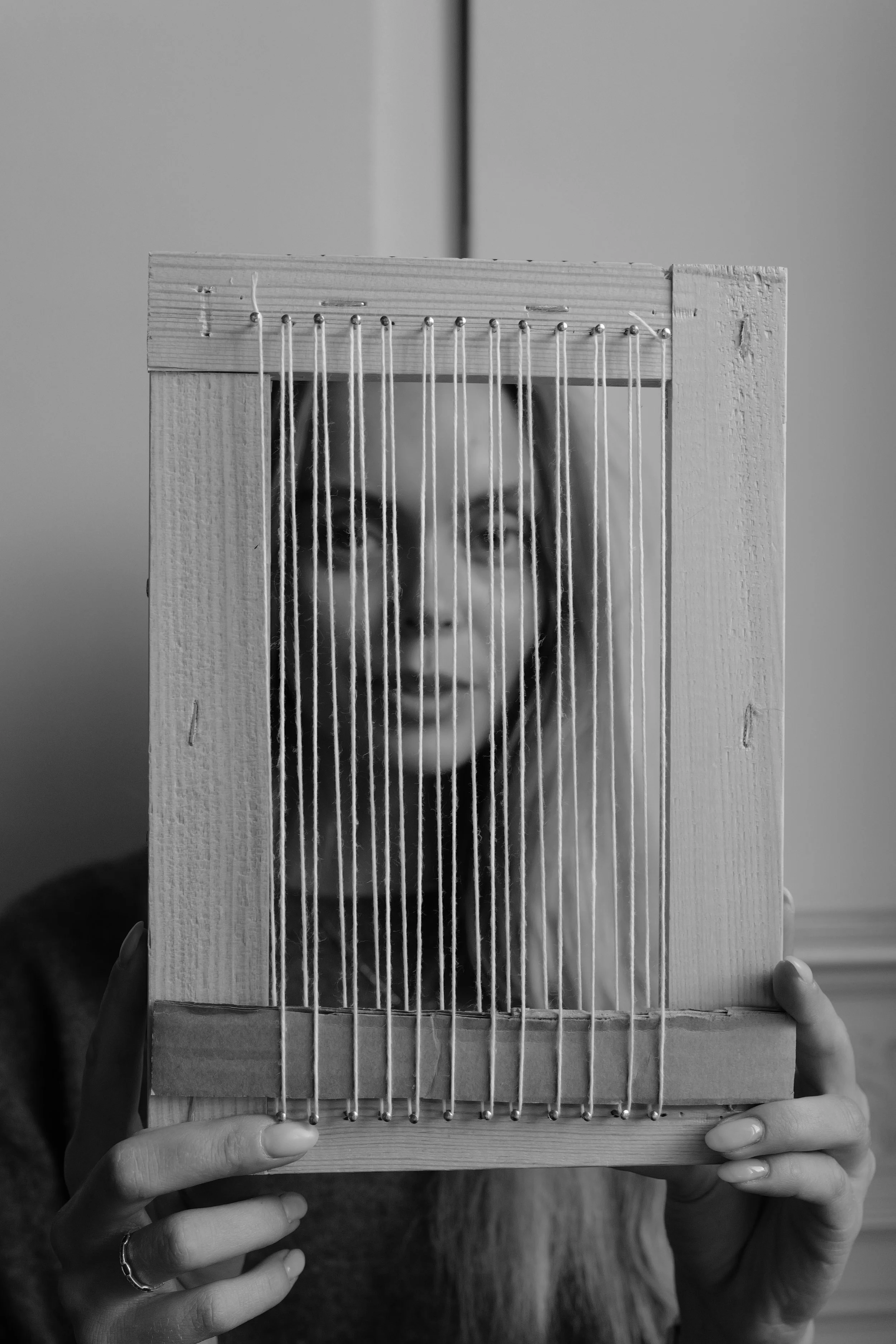
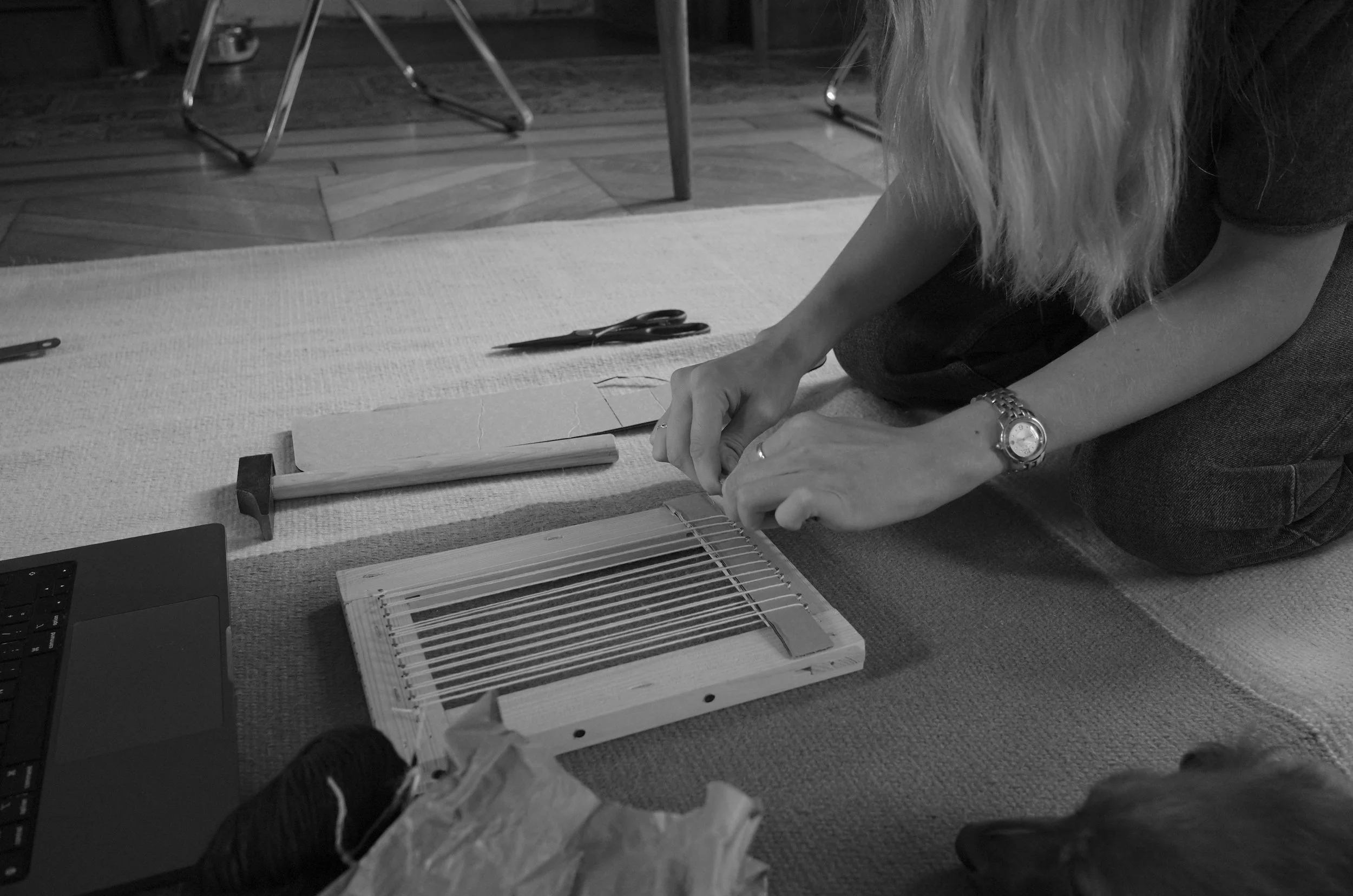
After researching several mediums, I felt particularly drawn to weaving. I enjoyed the repetition and symmetrical patterns in works by artists such as Anni Albers and Agnes Martin, and wanted to find a way to build a pattern with a similar structure. To connect it with my Sami heritage, I thought of using the northern landscape as a way of developing a pattern — more specifically, the unique sense of light there. Despite how far removed I am from my heritage, and the loss of cultural knowledge my family experienced, I realised that what we all share is an admiration for the beauty of the place from which we originate.
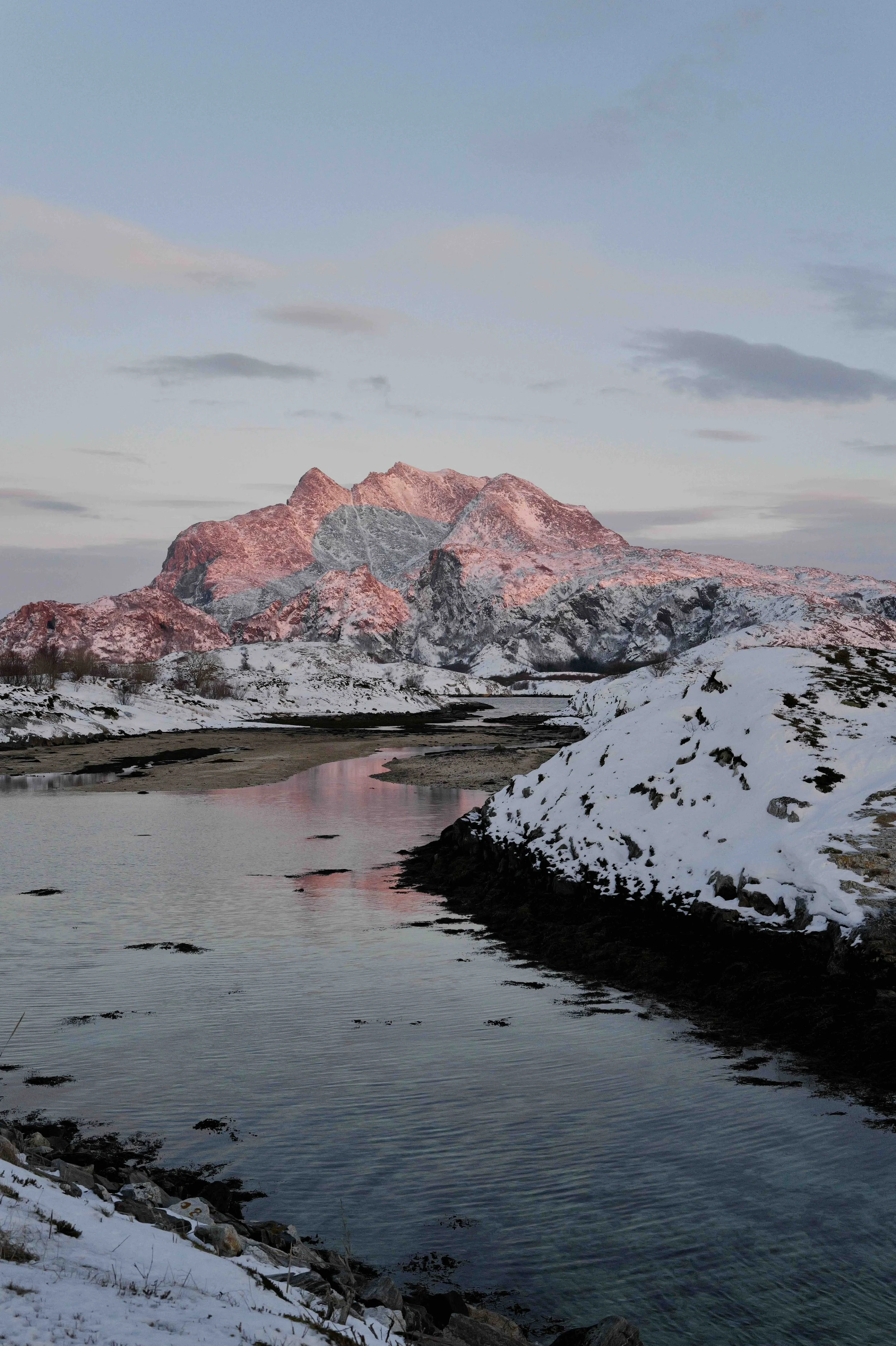
Photo by Olina Olseth, 2026
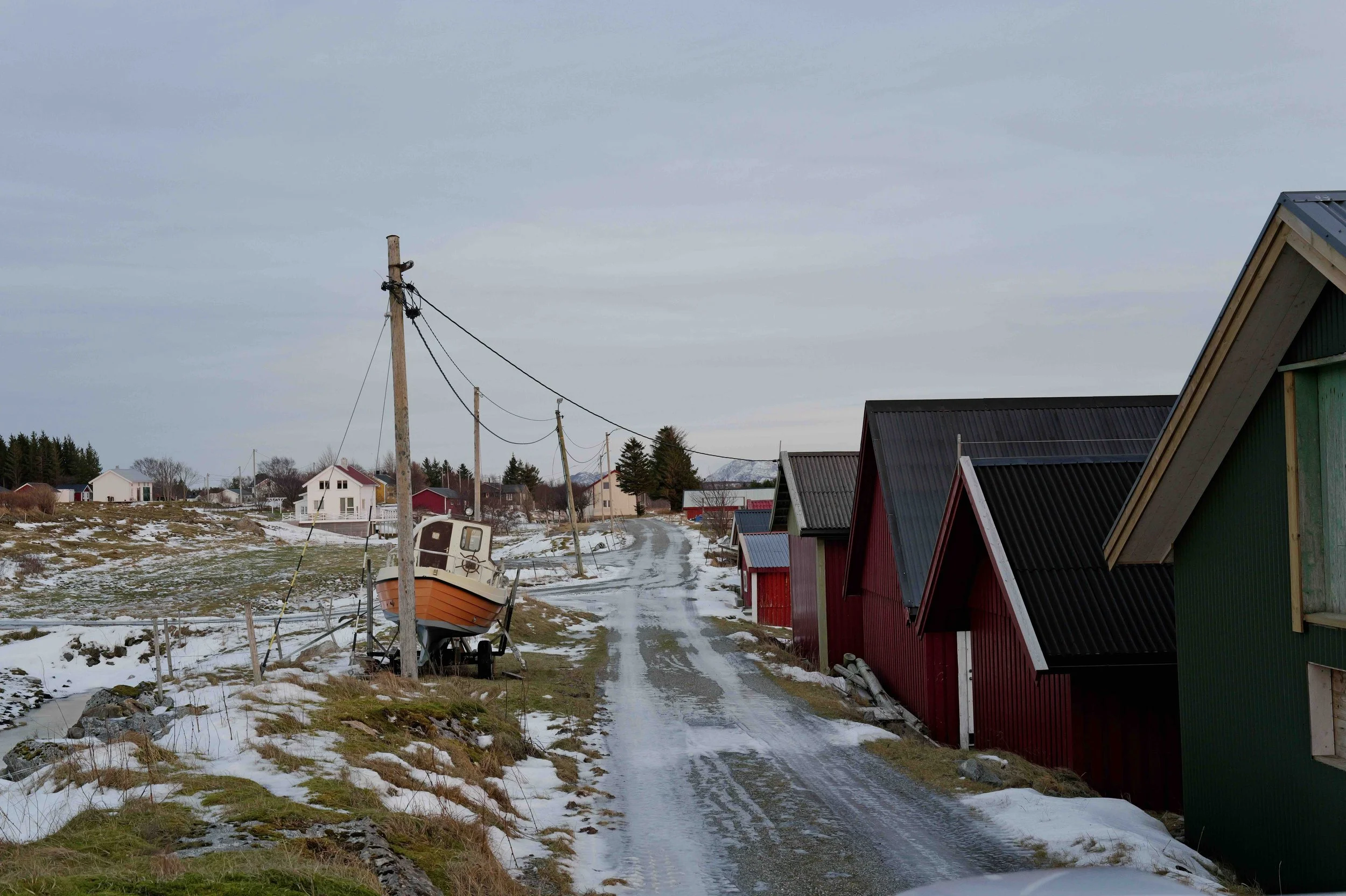
Photo by Giovanni Manetti, 2026
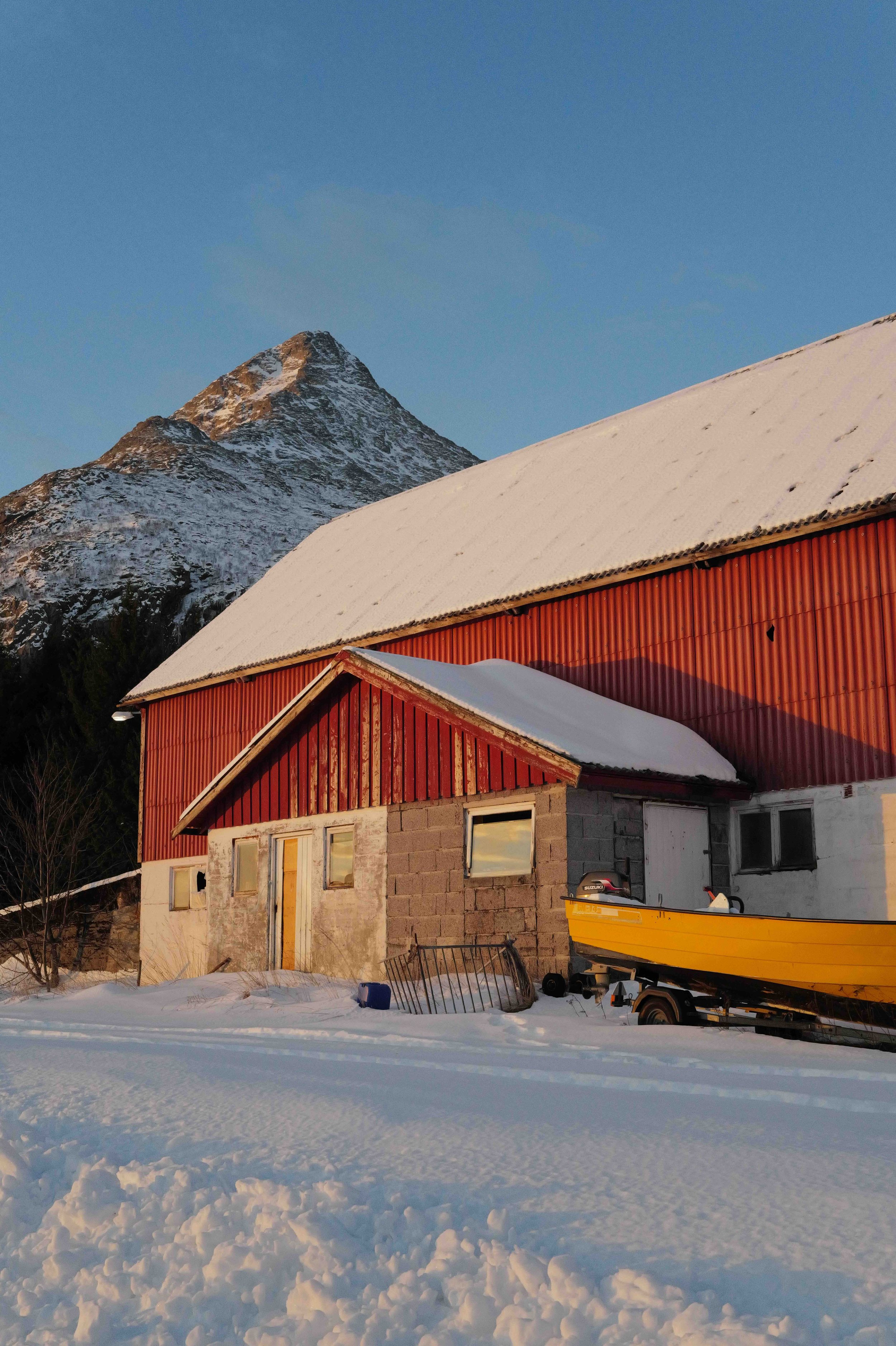
Photo by Giovanni Manetti, 2026
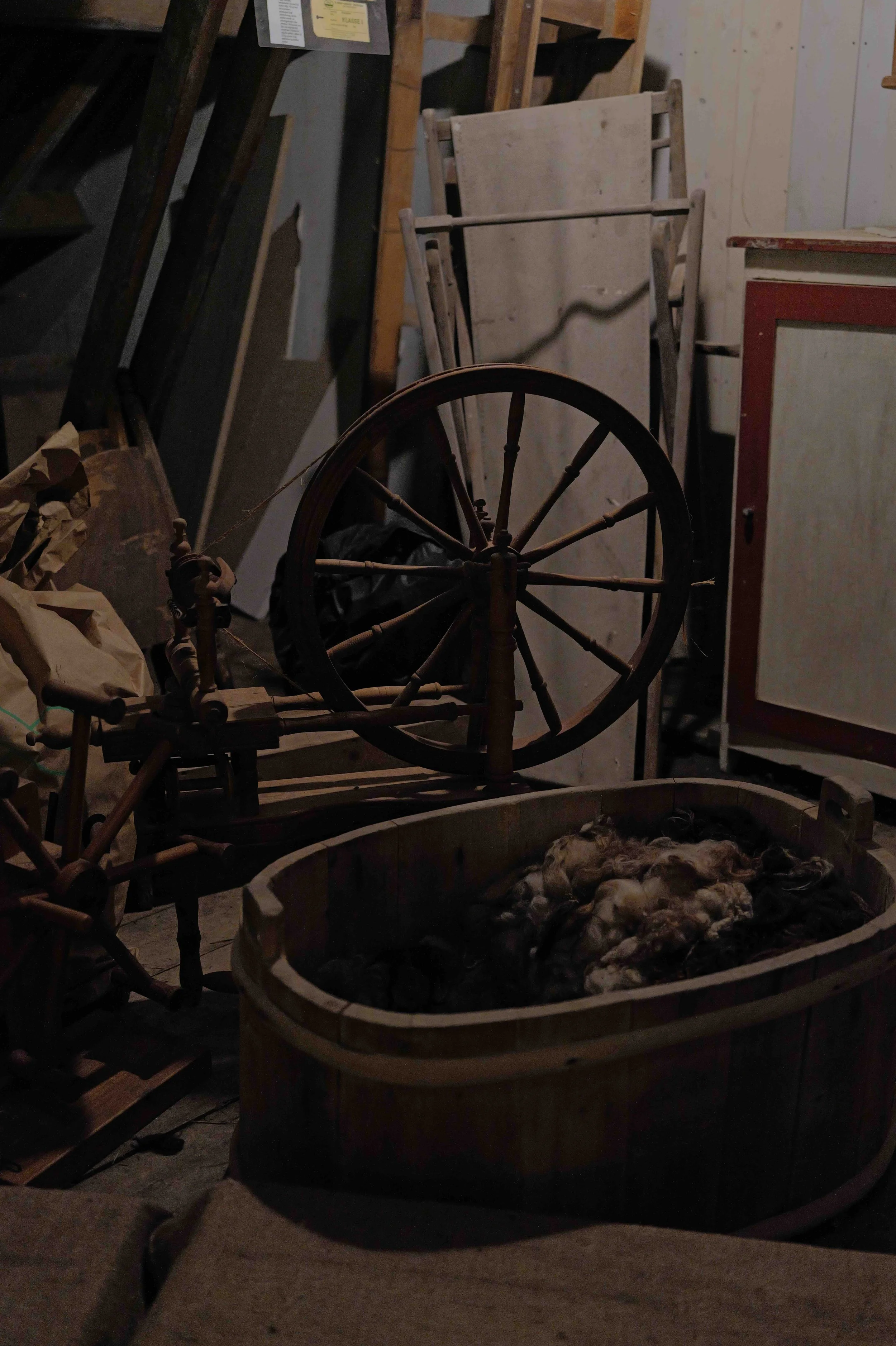
Photo by Giovanni Manetti, 2026
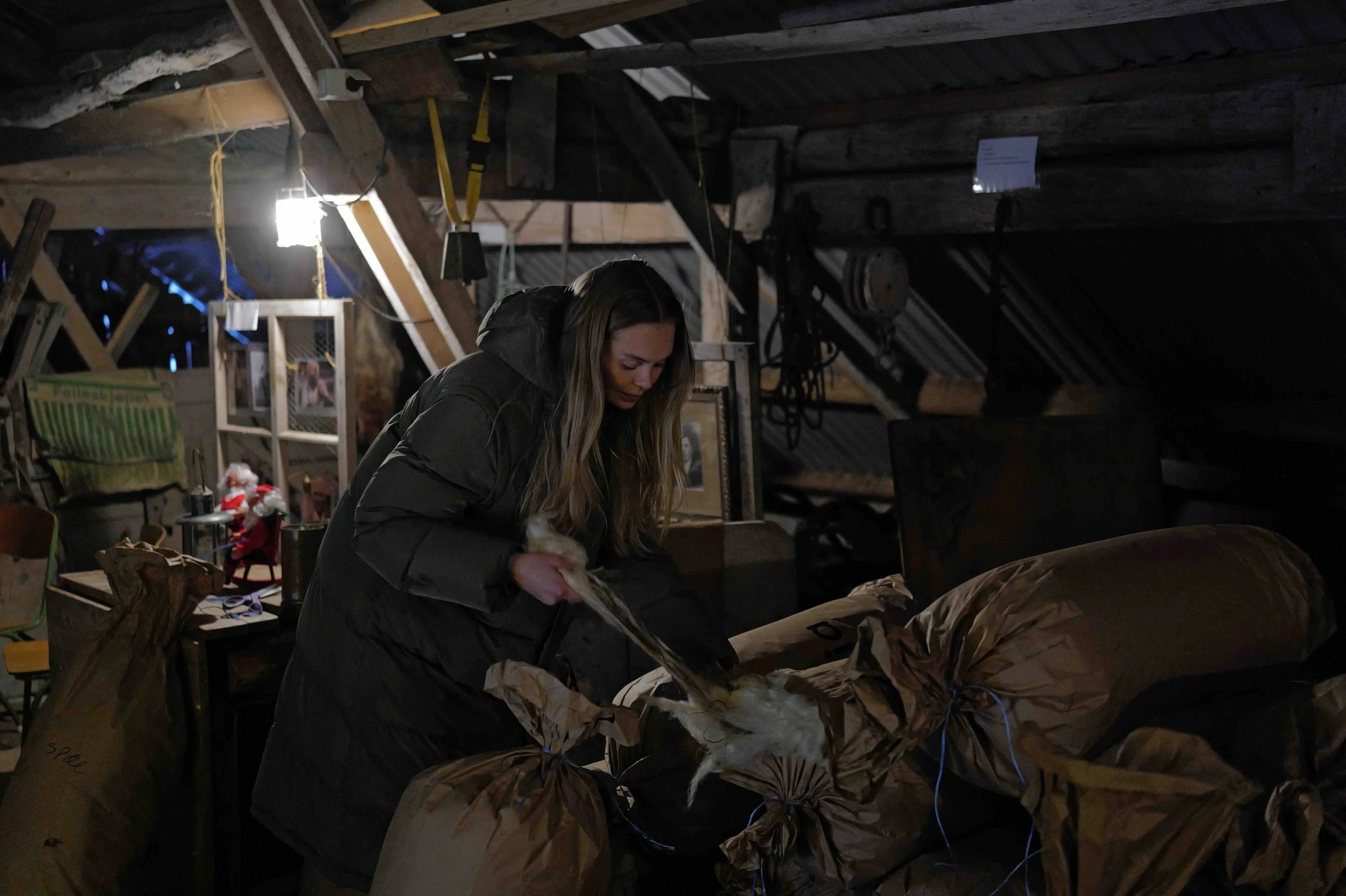
Photo by Giovanni Manetti, 2026
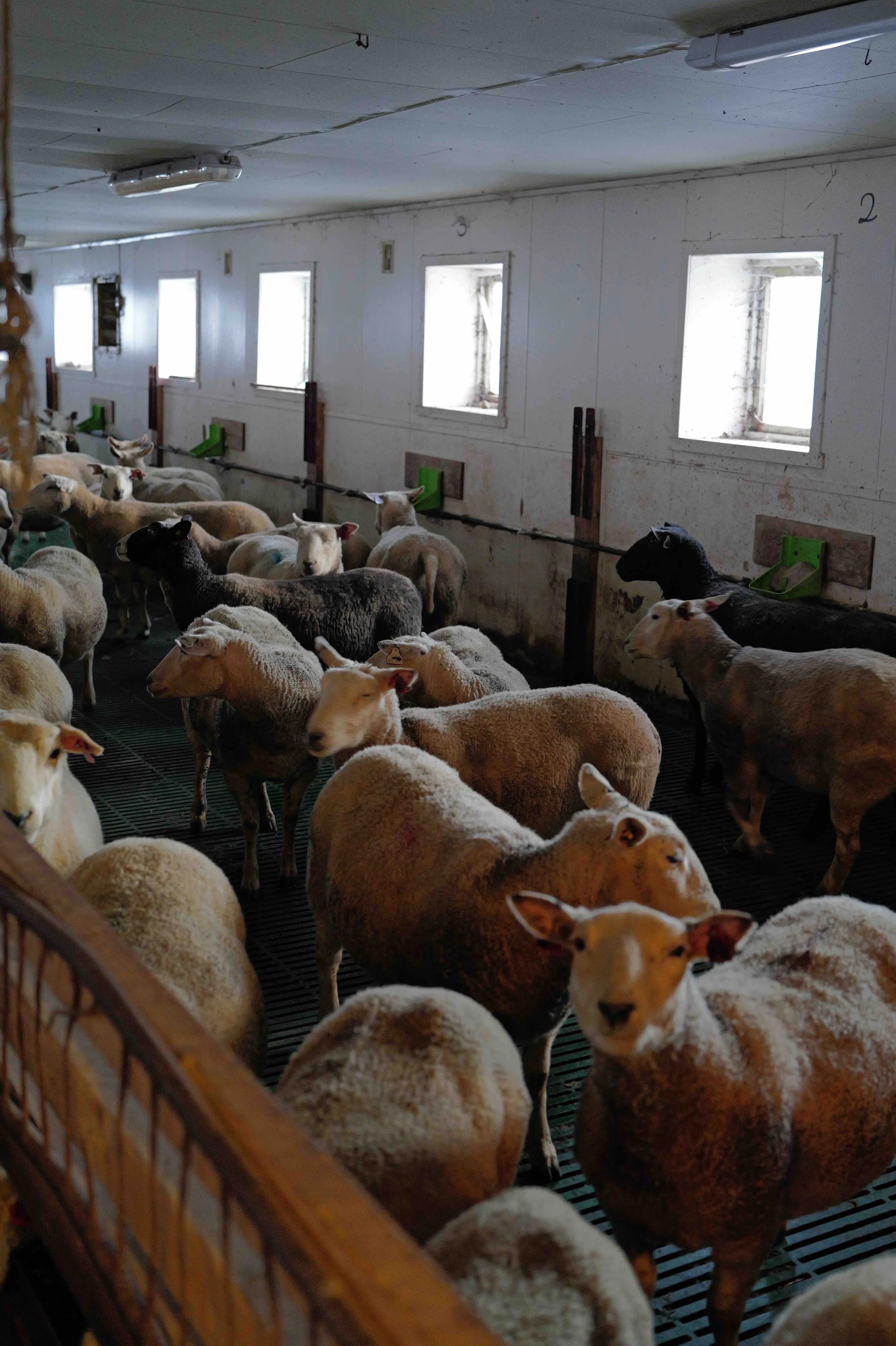
Photo by Giovanni Manetti, 2026
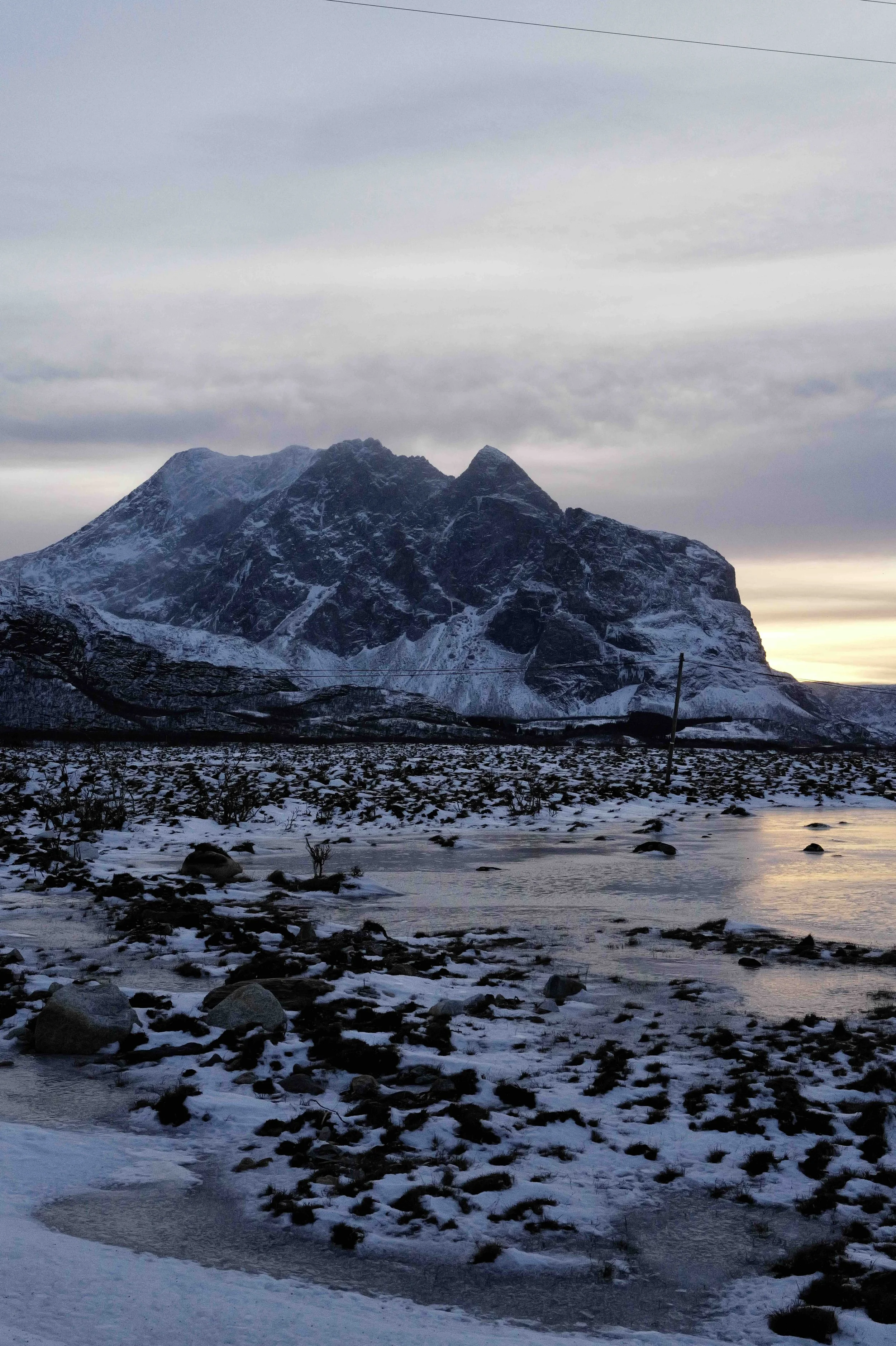
Photo by Giovanni Manetti, 2026
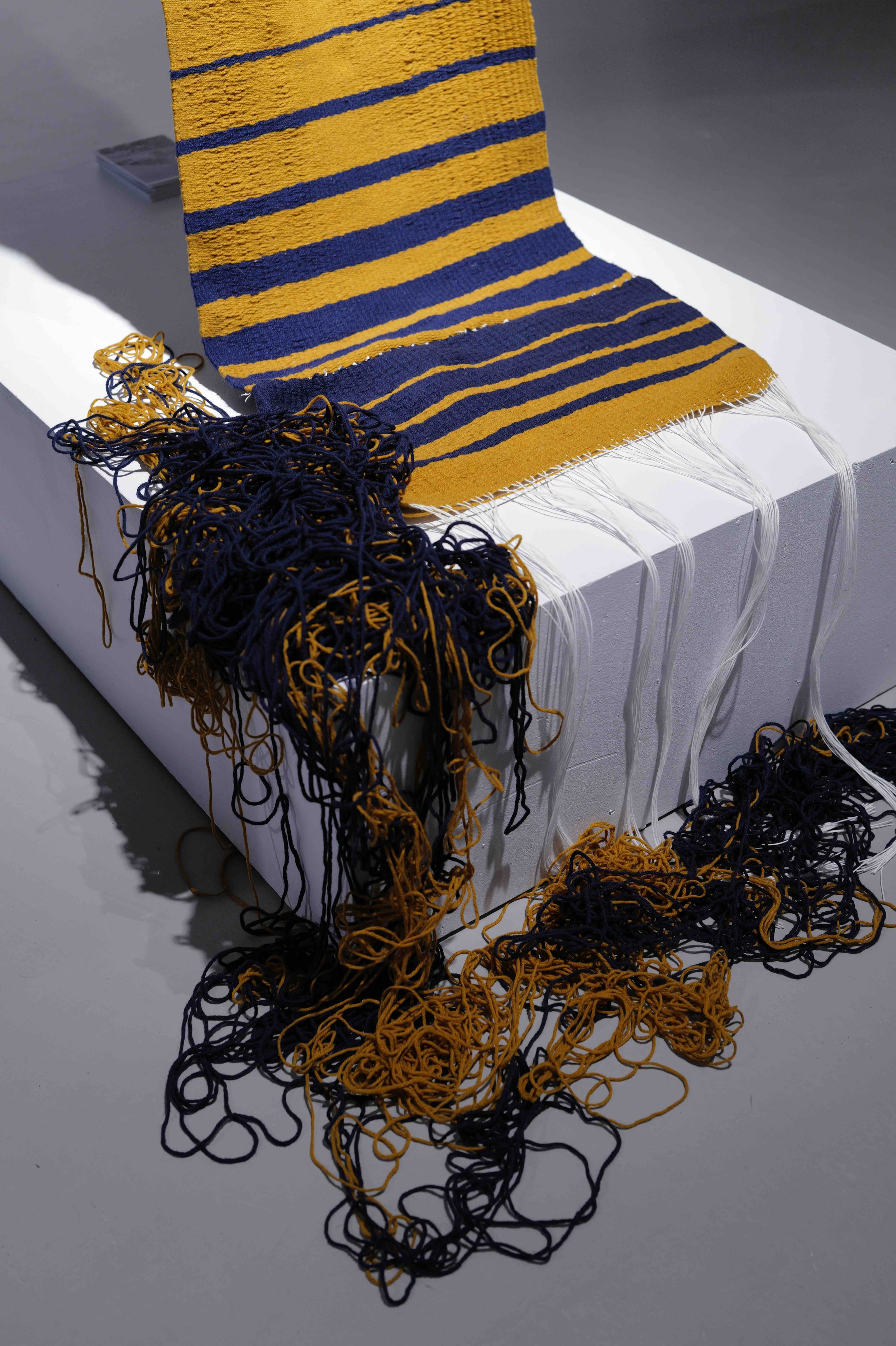
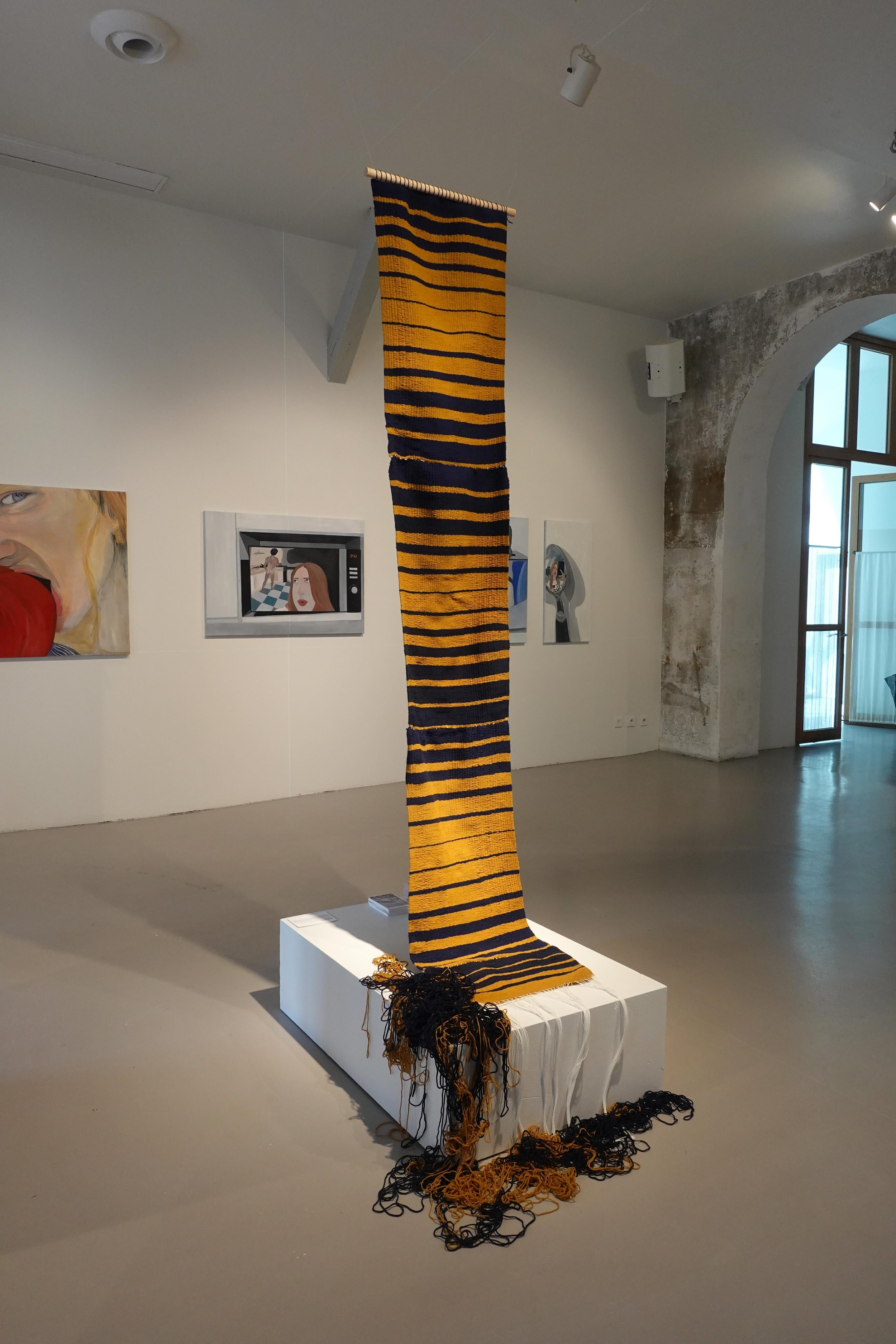
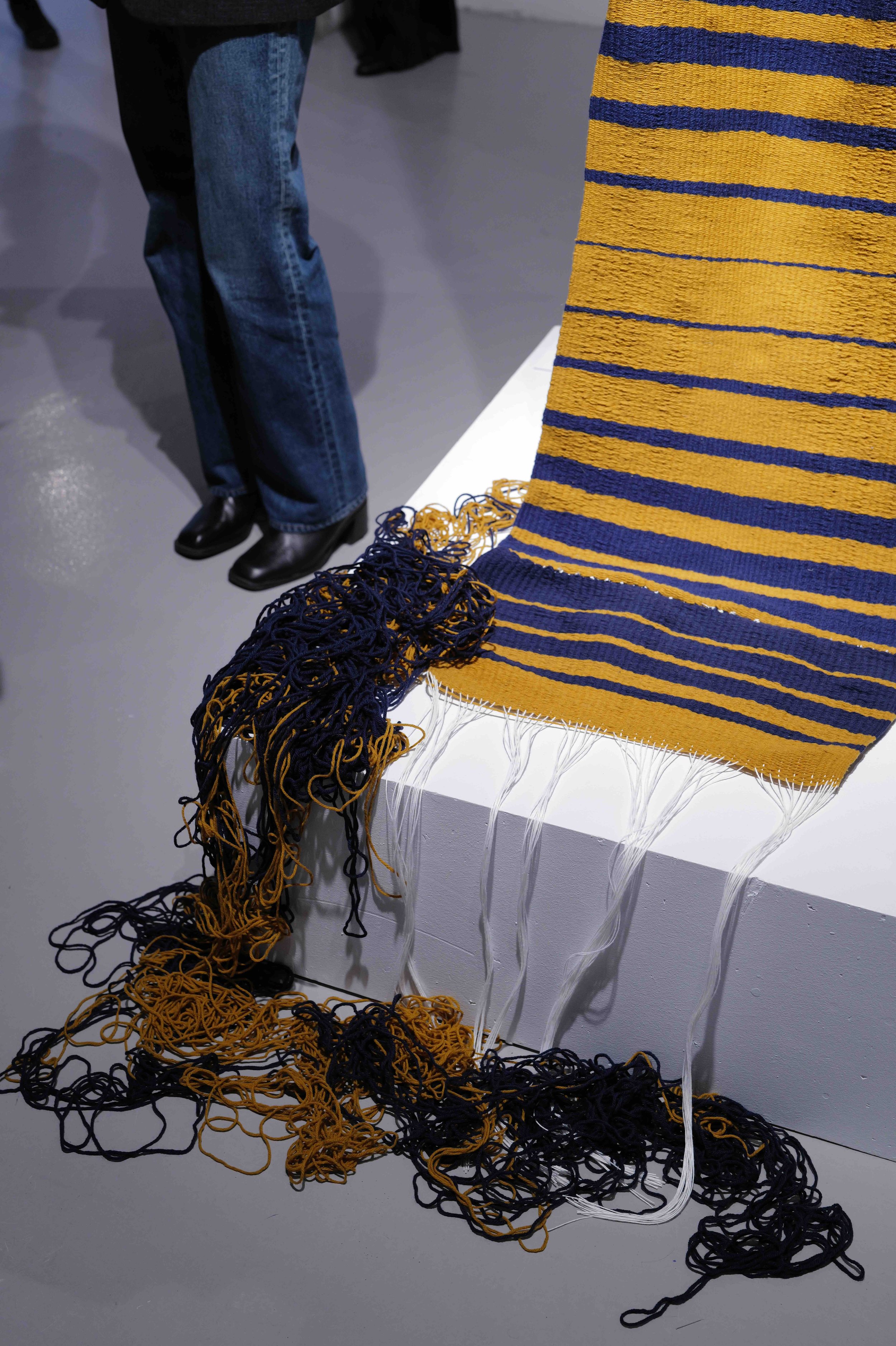
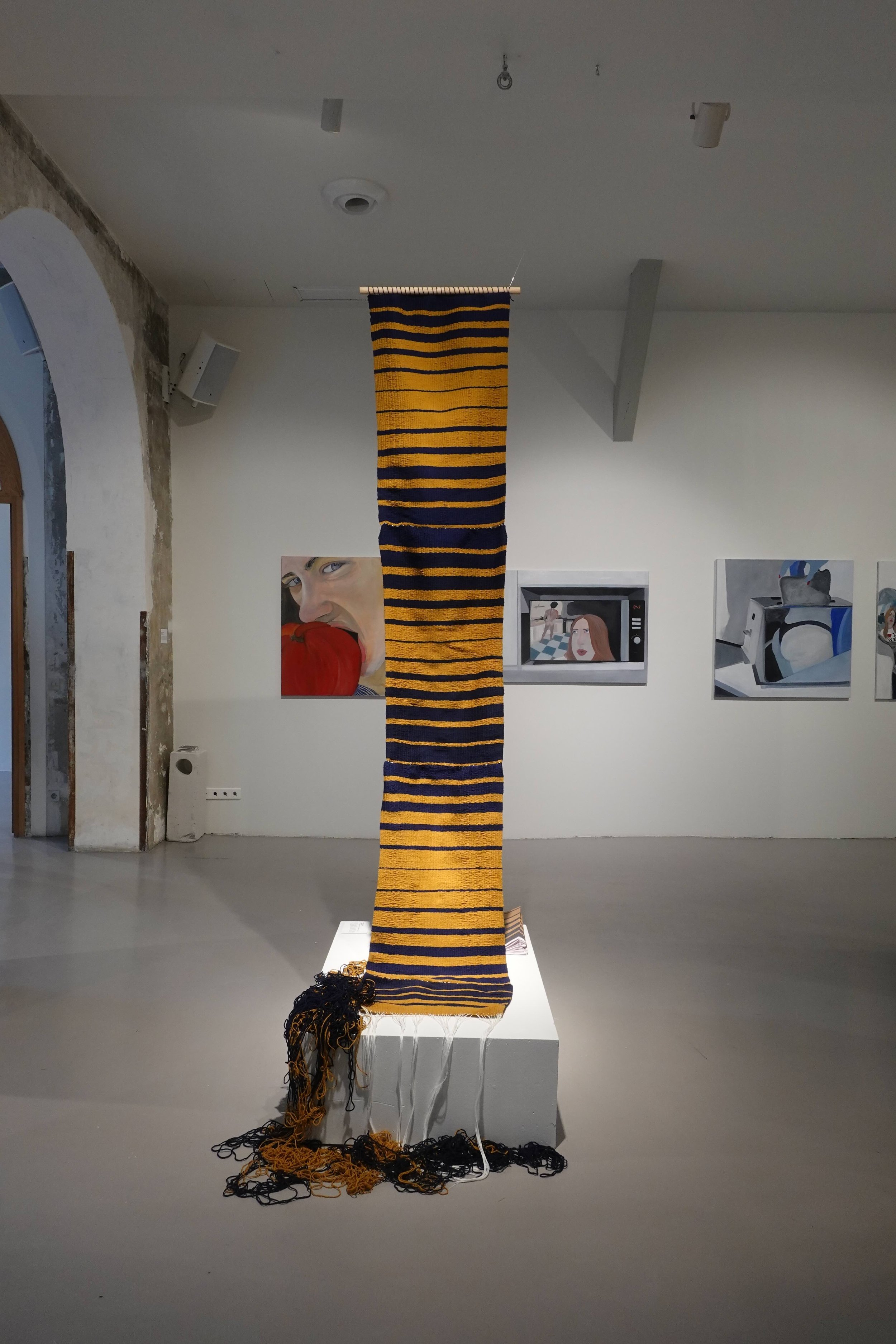
My final pattern is therefore based on the contrast between the hours of sunlight and darkness in Dønna, a small island in northern Norway where my grandmother is from. For the colours, I drew on traditional Sami symbolism, where blue represents the moon and yellow the sun. To source the material for my tapestry, I travelled to Dønna after more than ten years away, where I gathered local wool.
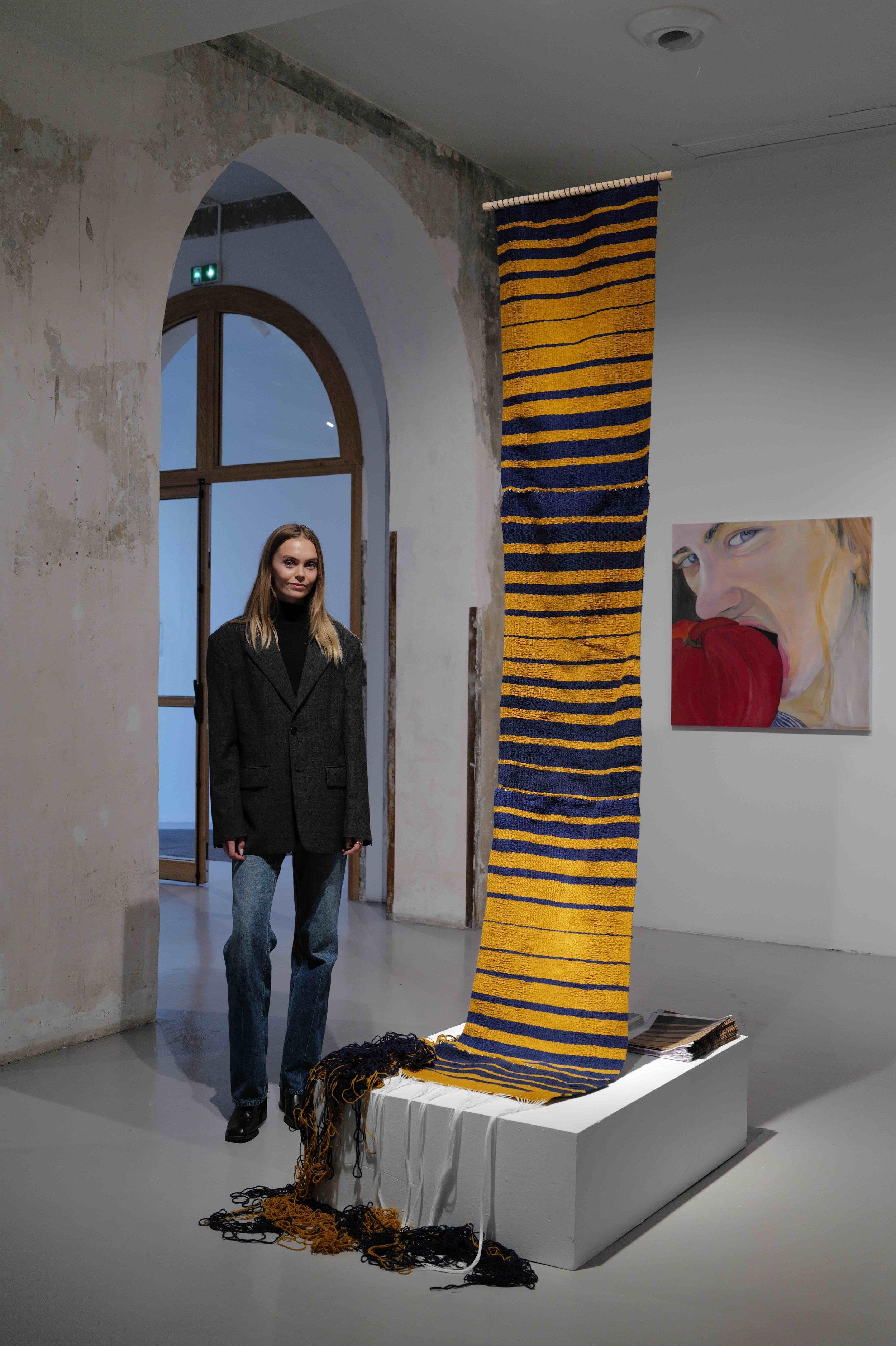
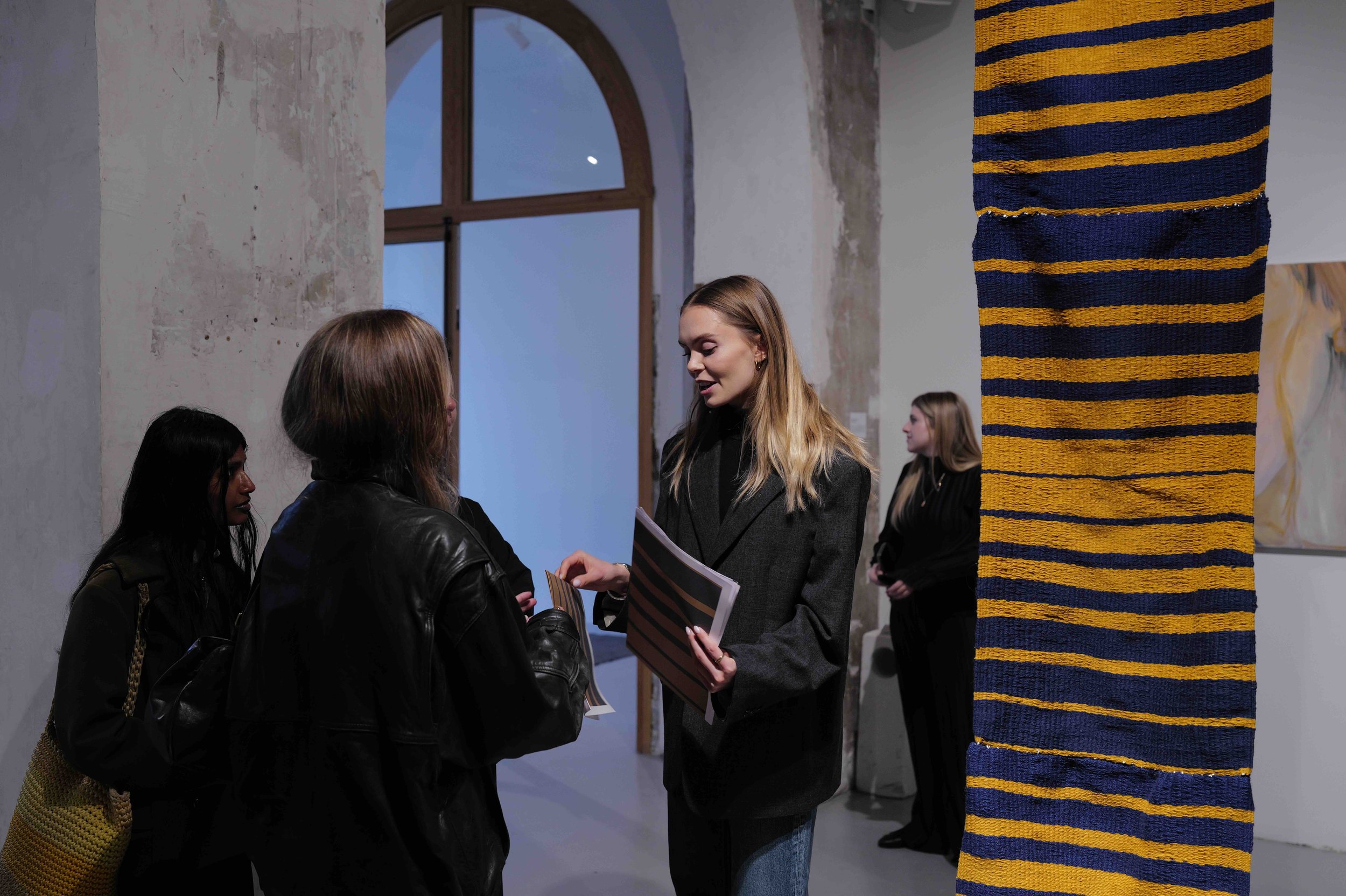
The final work takes the form of a tapestry whose pattern reflects the hours of sunlight and darkness during my time in Paris — three years and four months. With over 200 hours of weaving, this piece has not only taught me the techniques of a new medium, but also helped me learn more about my own roots. I hope this work can serve as a way of introducing this culture to a wider audience, telling the story of the women in my family and honouring their origins.
-OO
All photos by Giovanni Manetti, 2026